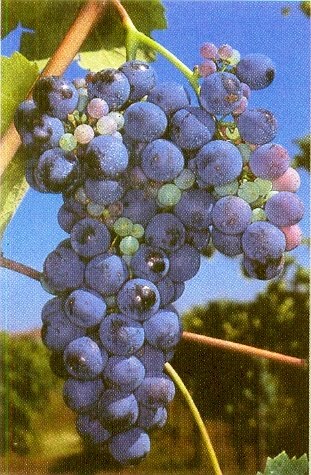
Not long ago a bartender friend of mine approached me with a cocktail recipe he had come across. One of the ingredients was a wine that he was unfamiliar with and wanted to know if I knew what it was. The wine was Barolo Chinato.
Barolo Chinato is a digestive wine from the Piedmont region of Italy typically served after dinner. It is made by steeping the bark of the cinchona tree (quinine) in aged Barolo. Each producer then flavors the wine with his own blend of herbs such as cinnamon, mint, vanilla, coriander even iris flowers. To say that it is an acquired taste is a bit of an understatement. If you’ve ever had the Italian soda pop Chinotto, then you’ve got an idea as to the flavor of this wine.
I had never thought of using it as a cocktail ingredient but once presented with the idea I could see the potential. The difficulty however, is finding the wine outside of Italy.
Over the holidays I ended up with a less than ideal bottle of Prosecco. Not wanting it to go to waste, I added a splash of Barolo Chinato. That mediocre wine was made drinkable and an Italian version of the Champagne cocktail was born.
I was so thrilled with my discovery I immediately messaged my bartender friend. His reply……...It’s like Bartender’s Bacon. Goes with everything.
Tuesday, January 24, 2012
Wednesday, January 18, 2012
Sicily - Etna DOC
Recently, I have seen an increased interest in Sicilian wines. The terroir and the indigenous varietals of the area make for wines that are a nice change from the classic varietals. I thought a bit of info about this wine region could help.
Sicily is the largest island in the Mediterranean and it is surrounded by a series of smaller islands including those of Lipari and Pantelleria. The island is mountainous, 80% of the land is covered by mountains and you can see Mt Etna from virtually everywhere. There are active volcanoes found throughout the smaller islands with those of Ustica and Pantelleria being inactive. Mt Etna was very active last year with a series of eruptions.
Viticulture has existed here since the 7th Century BC. The Phoenicians were making wine here in the 8th and 9th Century BC. Further developments came with the Greeks in the 3rd Century BC when Sicily’s port became the most important wine emporium of the Mediterranean. After the phylloxera outbreak, most all the vines were replanted with approximately 43.5% of the vines being less than 20 years old. Most of Sicily’s viticulture is concentrated on the West Coast in the province of Trapani and the climate is typically Mediterranean with little precipitation. Sicily lacks lakes and major rivers.
Sicilian wines have seen an increase in popularity over the last 20 years thanks in part to the increase of quality wines being produced. One of the areas which is seeing an increase of quality producers is the Etna DOC. Some of the islands’ most important producers are here. Tasca, Planeta, Duca di Salaparuta, and Firrato. Notable producers from other regions of Italy (Tuscany being one) are also attracted to this area. Its unique climatic conditions and volcanic soils result in wines that are vibrant and rich in personality. The excellent 2008 vintage helped draw attention to this area and we are only now starting to see its potential. Super Sicilians perhaps?
The Etna DOC is produced in the province of Catania which is on the Ionian Sea. The vines grow on the Eastern Slopes of Mt Etna and its unique terroir is made up of old vines planted alberello style up to 1000 m (3,280 ft) in the volcanic soils surrounding the volcano. These vines are exposed to strong thermal air exchanges as well as sea breezes. There are some very interesting wines being produced here with elegant bouquets that result in wines that are almost more northern in style. More fresh and fragrant than alcoholic and overripe.
The white wines are predominately made with the local grape Carricante. This grape has Sicilian origins and its name derives from its abundant production. Up until the end of the 1800’s this grape was cultivated throughout the island but now it is found mainly in the Catania area. The wines are straw yellow in color and have a delicate floral bouquet.
The red wines are made with a combination of Nerello Cappuccio and Nerello Mascalese. The name Nerello derives from the color of the vine which is blackish. Nero is the Italian word for black. This very simple way of identifying vines dates back to the times of Pliny the Elder.
Nerello Cappuccio is so named because of the cap, like a hood, that would grow and hide the bunches from sight. Cappuccio means hood in Italian. This particular varietal isn’t often vinified on its own. It is usually found as part of a blend with Nerello Mascalese. If found on its own, it results in a light ruby red wine, high in alcohol and not excessively tannic.
Nerello Mascalese gets its name from its place of origin. The varietal is at least 150 years old. These vines are grown ‘alberello’ (small tree) as opposed to the more common vine training methods. The reason for this is to help contain this vines vigor. This varietal is used throughout the Etna area and can be found vinified as a white, rose’ as well as a traditional red wine. The reds are an intense ruby red with a delicate nose with strong violet notes.
The white wines of Etna are the perfect accompaniment to seafood dishes while the reds work well with pastas, roasts, strong cheeses and all types of salamis.
I hope that this has inspired you to give the wines of Etna a try.
Tuesday, November 29, 2011
Cortona DOC
The Cortona area of Tuscany landed on everyone's radar with the Frances Mayes book Under The Tuscan Sun. Since then people have been flocking to the town and the surrounding area.
The Cortona DOC is located in the Tuscan province of Arezzo and more specifically in the Cortona commune (municipality/township). In order for a wine to be labeled Cortona DOC, the grapes must come from this specific area of Tuscany and only certain varietals are allowed. Besides Sangiovese, which is the red varietal found throughout Tuscany, Syrah has a huge presence in Cortona.
In a country with more indigenous varietals than any other, having an international varietal like Syrah as the backbone of a DOC is unusual. The explanation however is very simple. The Syrah vines have been in this area for centuries. Long before the current wine law system. French soldiers who had settled in this area brought the vines with them and those plantings thrived. And along with Syrah, Merlot and Cabernet Sauvignon. In fact, the wine laws recently changed to reflect that. Not long ago the allowable varietals in the Cortona DOC (red) were Sangiovese 40-60% and Canaiolo Nero 10-30%. Both traditional Tuscan varietals. The current regulations are Syrah 50-60% and Merlot 10-20%. If a varietal is stated on the label then the wine must contain at least 85% of that varietal.
The Syrah's from this area are really great examples of the varietal. With red and black berries, chocolate, coffee and white pepper, plus nuances of spices, tar and tobacco. The difficulty will be finding them outside of Tuscany.
The Cortona DOC is located in the Tuscan province of Arezzo and more specifically in the Cortona commune (municipality/township). In order for a wine to be labeled Cortona DOC, the grapes must come from this specific area of Tuscany and only certain varietals are allowed. Besides Sangiovese, which is the red varietal found throughout Tuscany, Syrah has a huge presence in Cortona.
In a country with more indigenous varietals than any other, having an international varietal like Syrah as the backbone of a DOC is unusual. The explanation however is very simple. The Syrah vines have been in this area for centuries. Long before the current wine law system. French soldiers who had settled in this area brought the vines with them and those plantings thrived. And along with Syrah, Merlot and Cabernet Sauvignon. In fact, the wine laws recently changed to reflect that. Not long ago the allowable varietals in the Cortona DOC (red) were Sangiovese 40-60% and Canaiolo Nero 10-30%. Both traditional Tuscan varietals. The current regulations are Syrah 50-60% and Merlot 10-20%. If a varietal is stated on the label then the wine must contain at least 85% of that varietal.
The Syrah's from this area are really great examples of the varietal. With red and black berries, chocolate, coffee and white pepper, plus nuances of spices, tar and tobacco. The difficulty will be finding them outside of Tuscany.
Sunday, November 27, 2011
The Wines of Lucca & Montecarlo
For the last 8 years, I've been splitting my time between Italy and Vancouver. In Italy I live in Lucca which is in Tuscany. I got my sommelier training there. When studying as a Som in Italy, you need to know everything about Italian wines. The region that I live in has 2 DOC rated wines. Colline Lucchesi DOC ( the Lucchese hills) and Montecarlo DOC.
Montecarlo has a long history of quality wines. The latin name for the Montcarlo area was Vivinaria or Vivinaia which means the wine road. This referenced the road that crossed the Montecarlo hills. Montecarlo was most famous for its white wines. Between the 1400 – 1500’s, Montecarlo white wines commanded the highest prices in the Florence markets. In 1408, Pope Gregory XII wanted only Montecarlo whites on his table and personally came to Montecarlo to taste the wines.
The Colline Lucchesi DOC is more traditional. Established in 1998, its wines are made up of more classic Tuscan varietals. The whites may contain Trebbiano Toscano, Greco, Grechetto, Vermentino, Malvasia, Chardonnay and Sauvignon Blanc. While the reds are made up of Sangiovese, Canaiolo, Ciliegiolo and up to 15% Merlot.
In general, the wines from Montecarlo and Colline Lucchesi are meant to be drank young, especially the whites. You can hold on to the reds for a couple of years if you want. The whites are crisp with a nice level of acidity. Perfect on a hot summer day. The reds work well throughout the meal, from antipasto to steak. They have an excellent quality to price ratio too. The chances of finding these wines abroad are slim so it’s best to enjoy them while you’re visiting.
There is no better pairing to local food than local wine.
Montecarlo has a long history of quality wines. The latin name for the Montcarlo area was Vivinaria or Vivinaia which means the wine road. This referenced the road that crossed the Montecarlo hills. Montecarlo was most famous for its white wines. Between the 1400 – 1500’s, Montecarlo white wines commanded the highest prices in the Florence markets. In 1408, Pope Gregory XII wanted only Montecarlo whites on his table and personally came to Montecarlo to taste the wines.
Montecarlo has been a DOC region since 1994. It was one of the first DOC ‘s to allow International (French) varietals. Trebbiano Toscano, Pinot Bianco, Pinot Grigio, Sauvignon Blanc, Semillon, Vermentino and Roussanne are all allowed in the white blend while the reds can be made up of Sangiovese, Canaiolo, Ciliegiolo, Colorino, Syrah, Malvasia, Cabernet Franc, Cabernet Sauvignon and Merlot.
The reason why the French varietals are permitted is simply that they have been here for hundreds of years. During the Napoleonic period, French soldiers were predominant in the area. Napoleon has ties to Lucca via his sister Elisa. She settled in Lucca and was the one who brought the Magnolia tree to the area. One of Lucca’s main gates, Porte Elisa, is named for her. The soldiers brought with them vine cuttings and planted their favorite varietals in the area. So, after existing for hundreds of years, it seemed right to allow them in the DOC.
The Colline Lucchesi DOC is more traditional. Established in 1998, its wines are made up of more classic Tuscan varietals. The whites may contain Trebbiano Toscano, Greco, Grechetto, Vermentino, Malvasia, Chardonnay and Sauvignon Blanc. While the reds are made up of Sangiovese, Canaiolo, Ciliegiolo and up to 15% Merlot.
Trebbiano Toscano is the most common white varietal in Tuscany. It is the same as Ugni Blanc which is used in Cognac production. It isn’t the most noble varietal but it does produce a nice dry, crisp white wine. Sangiovese is Tuscany’s most planted red. Brunello di Montalcino, Vino Nobile di Montepulciano, Chianti’s and Morellino di Scansano are all Sangiovese based wines.
In general, the wines from Montecarlo and Colline Lucchesi are meant to be drank young, especially the whites. You can hold on to the reds for a couple of years if you want. The whites are crisp with a nice level of acidity. Perfect on a hot summer day. The reds work well throughout the meal, from antipasto to steak. They have an excellent quality to price ratio too. The chances of finding these wines abroad are slim so it’s best to enjoy them while you’re visiting.
There is no better pairing to local food than local wine.
Thursday, October 27, 2011
Lambrusco - Emilia Romagna's Bubbles
The Emila-Romagna region of Italy is surrounded by Lombardy, The Veneto, Tuscany, Liguria & Piedmont. This region of Italy produces some of the foods we love the most. Parmigiano-Reggiano, Prosciuto di Parma, Balsamic Vinegar, Tortellini and Bolognese sauce. Emilia-Romagna’s Central area includes the towns of Modena, Parma & Bologna. A foodies dream. This area is also home to Lambrusco.
The Lambrusco vines have wild origins. In fact, Labrusca in latin means wild. ‘Proper’ Lambrusco is dry, frothy and strawberry-fruited with a bitter twist on the finish. It’s low in tannin and perfect with the fatty, pork-based diet of the Modena region. Local food, local wine is always the best match. This Lambrusco is nothing like the industrial screw cap versions such as Riunite.
Proper Lambrusco comes in cork-stopped bottles and is more expensive. It may also be difficult to find. These wines are not high in alcohol. They average 9.5% alc/vol.
The majority of Lambruscos are made in large batches in autoclaves however there is a new trend emerging: second fermentation in the bottle. These will be labeled metodo-tradizionale, metodo classico or even metodo-ancestrale. Most Lambruscos don’t declare years on the label and they are produced in Dry, Off-Dry, Sweetish or Sweet versions.
There are 5 Lambrusco DOCs in Emilia-Romagna.
Lambrusco di Sorbara DOC is the most traditional, mineral and least colored & fruity. It is also one of the most interesting. This particular Lambrusco varietal has sterile pollen which results in considerable fruit loss. Hence the limited production. Often, Lambrusco Salamino vines will be planted in the same vineyard to facilitate pollination.
This Lambrusco is ruby to garnet in color with a pinkish froth. It’s fresh, fine scent has a hint of violets and it has a delicate taste that’s tangy, well-balanced, fruity with pleasant acidity.
Another DOC is Lambrusco di Grasparossa di Castelvetro. Grasparossa means red stalk. In Autumn, the leaves and stalk of this varietal turn red. These grapes are late ripening and due to their low vigour they are cultivated in smaller vineyards. This is the least produced of all the Lambruscos and also the richest & juiciest with natural balsamic notes. It’s deep ruby in color with a violet sheen & light froth and a fruity & fragrant bouquet. It has good body, well-balanced acidity and is slightly fruity with a bitter aftertaste. An opulent & tannic wine.
Lambrusco di Salamino di Santa Croce DOC gets its name because the bunches resemble salami. This wine is also deep ruby red in color and its froth is purple edged. Its delicate scent is fruity and is reminiscent of ripe grapes. The wine is slightly acidic making it refreshing in taste with adequate body.
The other two Lambusco DOCs are Lambrusco di Modena and Lambrusco di Reggiano. These wines are blends of many different Lambrusco varietals making them perhaps a bit richer than the others.
These wines are really very enjoyable and worth seeking out. In winter we tend to eat richer, heavier foods so this wine may be a nice surprise for you and your guests.
The Lambrusco vines have wild origins. In fact, Labrusca in latin means wild. ‘Proper’ Lambrusco is dry, frothy and strawberry-fruited with a bitter twist on the finish. It’s low in tannin and perfect with the fatty, pork-based diet of the Modena region. Local food, local wine is always the best match. This Lambrusco is nothing like the industrial screw cap versions such as Riunite.
Proper Lambrusco comes in cork-stopped bottles and is more expensive. It may also be difficult to find. These wines are not high in alcohol. They average 9.5% alc/vol.
The majority of Lambruscos are made in large batches in autoclaves however there is a new trend emerging: second fermentation in the bottle. These will be labeled metodo-tradizionale, metodo classico or even metodo-ancestrale. Most Lambruscos don’t declare years on the label and they are produced in Dry, Off-Dry, Sweetish or Sweet versions.
There are 5 Lambrusco DOCs in Emilia-Romagna.
Lambrusco di Sorbara DOC is the most traditional, mineral and least colored & fruity. It is also one of the most interesting. This particular Lambrusco varietal has sterile pollen which results in considerable fruit loss. Hence the limited production. Often, Lambrusco Salamino vines will be planted in the same vineyard to facilitate pollination.
This Lambrusco is ruby to garnet in color with a pinkish froth. It’s fresh, fine scent has a hint of violets and it has a delicate taste that’s tangy, well-balanced, fruity with pleasant acidity.
Another DOC is Lambrusco di Grasparossa di Castelvetro. Grasparossa means red stalk. In Autumn, the leaves and stalk of this varietal turn red. These grapes are late ripening and due to their low vigour they are cultivated in smaller vineyards. This is the least produced of all the Lambruscos and also the richest & juiciest with natural balsamic notes. It’s deep ruby in color with a violet sheen & light froth and a fruity & fragrant bouquet. It has good body, well-balanced acidity and is slightly fruity with a bitter aftertaste. An opulent & tannic wine.
Lambrusco di Salamino di Santa Croce DOC gets its name because the bunches resemble salami. This wine is also deep ruby red in color and its froth is purple edged. Its delicate scent is fruity and is reminiscent of ripe grapes. The wine is slightly acidic making it refreshing in taste with adequate body.
The other two Lambusco DOCs are Lambrusco di Modena and Lambrusco di Reggiano. These wines are blends of many different Lambrusco varietals making them perhaps a bit richer than the others.
These wines are really very enjoyable and worth seeking out. In winter we tend to eat richer, heavier foods so this wine may be a nice surprise for you and your guests.
Thursday, October 13, 2011
Nebbiolo - The King of the Piedmont
As winter approaches, our choice of foods tend to lean towards meals that are hearty. Pastas with rich meat sauces, stews and for some of you, perhaps even game. With these types of foods you need a wine that can hold its own. A red wine with substance. Wines made with the Nebbiolo grape are a good choice.
Piedmont, which means foot of the mountain, is located in Italy’s Northwest. The Alps divide it from France. The region is made up of many mountains and foothills with most of the land too steep or cold to grow vines. That said, the region is currently home to 16 DOCG and 43 DOC wines, the leader in Italy. Tuscany comes in second with 9 DOCG and 38 DOC wines. While wine is produced throughout the Piedmont, its best wines are produced in the warmer regions further south, especially the two southeastern hill ranges of the Langhe and Monferrato.
In the Langhe region, near the town of Alba (famous for its white truffles), you can find the tiny villages of Barolo and Barbaresco. Barolo and Barbaresco wines are both DOCG wines and as such have to follow specific guidelines. The most important of which is the area of production. Both of these wines are produced in specific areas of the Langhe and the province of Cuneo and are 100% Nebbiolo.
Piedmont, which means foot of the mountain, is located in Italy’s Northwest. The Alps divide it from France. The region is made up of many mountains and foothills with most of the land too steep or cold to grow vines. That said, the region is currently home to 16 DOCG and 43 DOC wines, the leader in Italy. Tuscany comes in second with 9 DOCG and 38 DOC wines. While wine is produced throughout the Piedmont, its best wines are produced in the warmer regions further south, especially the two southeastern hill ranges of the Langhe and Monferrato.
In the Langhe region, near the town of Alba (famous for its white truffles), you can find the tiny villages of Barolo and Barbaresco. Barolo and Barbaresco wines are both DOCG wines and as such have to follow specific guidelines. The most important of which is the area of production. Both of these wines are produced in specific areas of the Langhe and the province of Cuneo and are 100% Nebbiolo.
The Nebbiolo grape is a very difficult grape to grow. It is a late-ripening variety which often ends up being harvested very late in the season. Nebbia is the Italian word for fog and the Nebbiolo grape derives its name from the fog that settles over the area during harvest time. It is a grape that is very high in tannins which make the wines produced from this grape very difficult to drink young. Barbaresco has a mandatory aging of 26 months of which 9 are in the barrel. The Riserva has a 50 month mandatory aging (9 in barrel). Barolo is aged 38 months with 18 of those in the barrel. The Riserva is aged 62 months (18 in barrel).
Traditionally, large chestnut barrels were used but this wood imparted harsh tannins into the wine. This made the wine even more difficult to drink young. Today, French Oak barrels are more commonly used and coupled with modern vinification techniques, the wine is drinkable sooner. That being said, both Barolo and Barbaresco wines can be aged up to 20 years. Some even longer and the general rule of thumb is not to drink these wines until they are at least 10 years old.
There are many other wines from the Piedmont made with the Nebbiolo grape. Here are some others to look for. Please note that not all of these are 100% Nebbiolo, some are blended with other local varietals. Vespolina and Bonarda are the most popular.
DOCGs Gattinara, Ghemme and Roero
DOC’s Albugnano, Boca, Bramaterra, Canavese, Carema, Fara, Langhe, Monferrato and Nebbiolo d’Alba.
On some bottles you may find the names bricco or sori. In the Piedmontese dialect, bricco means the sun-catching crest of the hill and sori is the south-facing slope. Producer Ceretto has a Barolo called Bricco Rocche, which is from the vineyard of the same name and Angelo Gaja has a Barbaresco called Sori Tildin. Piedmont has much in common with France’s Burgundy region. They both focus on one main grape (Nebbiolo and Pinot Noir) and each producer tends to have small landholdings.
There are many fine producers of both Barolo and Barbaresco. Some Barolo producers to look for include Aldo Conterno, Luigi Einaudi, Paolo Scavino, Fontanafredda, Batasiolo, Anselma and Pio Cesare. Barbaresco producers include Marchesi di Gresy, Moccagatta. The following produce both. Bruno Giacosa, Gaja, and Prunotto.
For your next dinner party, make it Piedmont themed. Cook some hearty dishes and have each guest bring a different Nebbiolo based wine. Have a different wine glass for each and taste them all with the meal and see how they compare. Pour the wines in order of age, from youngest to oldest. Set a price point for the wines just to make it fair.
Sounds like a great way to stay warm this winter.
Salute!
Traditionally, large chestnut barrels were used but this wood imparted harsh tannins into the wine. This made the wine even more difficult to drink young. Today, French Oak barrels are more commonly used and coupled with modern vinification techniques, the wine is drinkable sooner. That being said, both Barolo and Barbaresco wines can be aged up to 20 years. Some even longer and the general rule of thumb is not to drink these wines until they are at least 10 years old.
There are many other wines from the Piedmont made with the Nebbiolo grape. Here are some others to look for. Please note that not all of these are 100% Nebbiolo, some are blended with other local varietals. Vespolina and Bonarda are the most popular.
DOCGs Gattinara, Ghemme and Roero
DOC’s Albugnano, Boca, Bramaterra, Canavese, Carema, Fara, Langhe, Monferrato and Nebbiolo d’Alba.
On some bottles you may find the names bricco or sori. In the Piedmontese dialect, bricco means the sun-catching crest of the hill and sori is the south-facing slope. Producer Ceretto has a Barolo called Bricco Rocche, which is from the vineyard of the same name and Angelo Gaja has a Barbaresco called Sori Tildin. Piedmont has much in common with France’s Burgundy region. They both focus on one main grape (Nebbiolo and Pinot Noir) and each producer tends to have small landholdings.
There are many fine producers of both Barolo and Barbaresco. Some Barolo producers to look for include Aldo Conterno, Luigi Einaudi, Paolo Scavino, Fontanafredda, Batasiolo, Anselma and Pio Cesare. Barbaresco producers include Marchesi di Gresy, Moccagatta. The following produce both. Bruno Giacosa, Gaja, and Prunotto.
For your next dinner party, make it Piedmont themed. Cook some hearty dishes and have each guest bring a different Nebbiolo based wine. Have a different wine glass for each and taste them all with the meal and see how they compare. Pour the wines in order of age, from youngest to oldest. Set a price point for the wines just to make it fair.
Sounds like a great way to stay warm this winter.
Salute!
Wednesday, September 21, 2011
Marsala - Not Just For Cooking
Sicily has a wealth of fabulous wines. Probably their most famous is also the one that is most disliked. Marsala. For many years it has mainly been used solely for cooking. Veal Marsala anyone? This truly is a shame because the wine deserves much more respect.
Marsala as we know it was created in 1770 by the Englishman John Woodhouse, an expert on Spanish and Portuguese wines. While visiting the area, he was so taken with the local wine he purchased 20,000 litres (5,283 gallons) for shipment to England where wines such as Port, Sherry and Madeira were already extremely popular. Marsala is a fortified wine. It is similar to Port in its structure and vinification style but not in taste. It also can be aged in a solera like Sherry. Woodhouse gave the wine its name and in 1796 purchased property near the port and set up a winery.
Admiral Nelson was a fan of this wine as was another Englishman, Benjamin Ingham. Ingham purchased land near that of Woodhouse and introduced it to the wine world exporting it as far away as Australia. In 1832, a Calabrese named Vincenzo Florio started his company in Marsala. His was the first Italian winery of an industrial size. In 20 years, Florio became the leader in the marketing of Marsala and thus making Italian wine history.
Unfortunately, over time the quality of Marsala dropped partly due to excess production thus relegating it to a cooking wine. In 1984, laws were put into place to help re-launch the wine by severely regulating its production. Today we are seeing more and more quality Marsala being produced.
Marsala is made in 3 colors, Oro (golden), Ambra (amber) & Rubino (ruby). Rubino is the least common type. The grape varieties used in the making of Marsala are varietals that are indigenous to southern Italy. Oro and Ambra are made with a combination of Grillo, Catarratto, Inzolia, Ansonica and Damaschino. Rubino is made with Calabrese (aka Nero d’Avola), Perricone, Nerello Mascalese plus up to 30% white varietals. There are 3 sweetness levels of Marsala. Dry, Off-Dry and Sweet. Dry versions have less than 40 g/l of residual sugar with sweet versions containing more than 100 g/l of residual sugar. Off-Dry falls in between.
Marsala grapes are harvested in September and made into wine. That wine is then fortified with a liqueur which is a blend of alcohol, wine and any number of flavors and aromas. Much like the Champagne and Cognac houses, Marsala producers have their own secret recipes for the liqueur that is used to fortify their wines. The addition of this liqueur to the wine increases the alcohol/volume. Marsala is typically around 18%.
After vinification, the wine is then aged. There are 5 ageing categories.
Fine – min 1 year
Superiore – min 2 years in wood
Superiore Riserva – min 4 years in wood
Vergine and/or Soleras – min 5 years in wood
Vergine and/or Soleras Stravecchio (Extra Old) – min 10 years in wood
Fine Marsala is a nice accompaniment with cookies and dried fruit. It can age 4-5 years.
Superiore & Superiore Riserva can accompany cheeses & desserts. They can age 7-8 years and 10-12 years respectively.
Vergine & Stravecchio are best served with aged cheeses or as a meditation wine. These wines can age 20-35 years and 50-70 years and are in the same class as some of the best tawny Ports and oloroso Sherries.
Recently I have seen an increased interest in Sherry. It would be nice if Marsala achieved the same popularity. I recommend serving a quality Marsala with a cheese course after your next dinner party. I know that not everyone is a fan of blue cheeses but you really can’t beat a Vergine Marsala with some gorgonzola.
I hope that you’ll be courageous and give it a try.
Subscribe to:
Posts (Atom)